Showing posts with label Recycled Materials. Show all posts

11/07/2013

Write on: Delightful Desks Made From EcoFriendly Materials

A good desk can make all the difference. It's a catalyst for creativity, a push towards productivity, a gentle nudge in the direction of neatness. We've rounded up a collection of DIY desks that use reclaimed building materials in really beautiful, unexpected ways. These desks aren't just functional (which they are), they're also a surprise in stylish sustainability. Lumber, pipes and bolts never looked so good! 

So grab a couple power tools, carve out a few hours of time and get your build on. Whether you're using to read, write, craft or create, you'll have a piece of furniture that's sure to be on your (very short) list of favorites. 

Pipes give this desk a sturdy, industrial look. 

This funky, functional desk makes use of upcycled organizers. 

This table, made with repurposed machine legs is "sew" cute!

Hairpin legs + reclaimed wood = fantastic

Salvaged corbels make for a very "game of thrones" vibe. I dig it. 

Book lover? Prove it with a geek chic table desk. 

Old doors make the perfect tabletop for a new desk. 

Like the bat cave, but for crafters. This hidden desk is so awesome. 

Book cases do double duty in this smart desk DIY.

Our nerd hearts are rejoicing over this novel-stacked desk. 

Reclaimed materials give this desk a wonderful, farm feel.

By: Sarah Rendo

10/07/2013

House/Boats

We've all heard of houseboats, the floating ship/home hybrids that ride down a river or bob lazily in a lake. But what about boat houses? Some very enterprising builders have repurposed out-of-commision sloops, steamboats and skiffs into very interesting single family homes.

The result? Aquatic-themed abodes that will amaze and astound you.  And while plopping a yacht in the neighborhood might make you a feel like a fish out of water, we have a feeling these upcyclers think their creations are definitely something to "sea."

Follow us on Pinterest for even more inspiration.

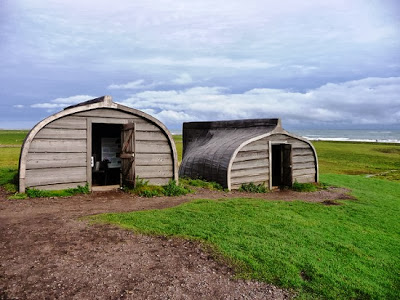
Upcycled, overturned boats make adorable sheds!

Loving this landlocked boat-turned-house. 

Two boats are better than one house! 

A tugboat is recycled into a charming lake house.

A retired boat captain repurposed an old boat into a rustic seaside abode.

Would you believe this vacation hotel used to be an oil rig? 

The Apple Jack was lovingly restored by an upcycling pro. 

This hotel in thailand uses colorful recycled boats as guest rooms. 

A repurposed boat lends its shape to the roof of this tiny house. 
Posted by: Sarah Rendo

7/25/2012

2012 Olympics Games Divert Landfill through Reuse and Recycling


The 2012 London Olympics and the London Organizing Committee of Olympic Games (LOCOG) has made it their goal to become known as the “greenest games in history” and are taking major steps to ensure that that goal is achieved. LOCOG has worked hard to ensure that any possible waste from the entire event is “reused” or “recycled.”


The site chosen for the 2012 Olympic Stadium in London was a previously developed site that had been labeled a “brownfield,” a contaminated site with previous industrial development. Prior to construction of the arena, the site had to be cleaned, decontaminated, and tested for purification. Doing so kept two million tons of contaminated soil from going to the landfill. The target goal for this stage of construction was to reuse 80% of the soil. The goal was surpassed and the project reused 85% of the existing, previously contaminated soil.

Construction of the Olympic Stadium, was also designed with sustainability in mind.  Populous, the design team for the structure, incorporated into the design, the reuse of confiscated guns. Over the year, the Metropolitan Police colledted over 52 tons of metal from guns and knives. That material was diverted from the landfill and instead was melted and used in the structure.

LOCAG’s goal for construction of the Olympic Stadium was to send zero waste to the landfill. By the end of construction, ninety percent of the construction waste had either been reused or been recycled. In addition to salvaging excess construction materials, 20% of the materials used in the construction of the venues were recycled materials.

In addition to the “green” construction efforts, LOCOG has also been teaming up and encouraging other supporters of the Olympic Games to raise public awareness for the need to go green. Coca-Cola has promised to recycle and reuse all the plastic of their products as well as other products from the events and will reuse the plastic for new bottles. Local packaging companies have teamed up with LOCOG to ensure that all packaging for the 2012 games will be made of compostable materials. Through the duration of the Olympic Games, it is expected that 3600 tons of waste will be produced from packaging alone which will be diverted from a landfill.

LOCOG’s goal for the 2012 Games is zero waste to the landfill, however, have pledged that 70% of will be reused, recycled, or composted. LOCOG’s goals to keep the 2012 Olympic Games green and their efforts to involve other supporters make the games not only the greenest games in history, but also the largest green effort.

Thanks to the 2012 Olypmics for supporting and promoting sustainability and reuse!

1/11/2011

Rethink Recycling - PlanetReuse cited in DWELL

Bringing reuse and recycling more and more to the mainstream, the February 2011 Dwell magazine highlights amazing reuse and recycling efforts in projects all over the world.

It's a great issue that showcases reuse not always a rustic, weathered or worn-out looking option, but also provides a wonderful palette of material for many modern, elegant and contemporary looks for homes and commercial projects.

Definitely grab a copy or peruse the office copy for reused material inspiration!

PlanetReuse is happy to be cited in the issue in the "Your Turn..." section as a go-to source to connect buyers and sellers of reclaimed materials and recycled materials by hosting online material listings as well as want ads.

The BMRA (Building Materials Reuse Association) is also cited and is an amazing organization with an informative website for more information about materials reuse, upcoming events, and includes an extensive directory of reuse centers and deconstruction companies throughout the US.

For more resources and inspiration:
Dwell - February 2011 issue.


4/23/2010

KSU Student's Clever Material Reuse


Tomorrow, Kansas State University will hold their campus-wide Open House event which will serve as an opportunity for colleges and departments to showcase their students abilities. In the College of Architecture, Planning, and Design, the Interior Architecture + Product Design students are more than happy to show people what they do all day (and night) in Seaton Hall. Third-year IA+PD students are in-charge of the theme, design, and set-up of the department's display, not just voluntarily, but also as a part of a course grade. The main challenge was the shoe-string budget which propagated the issue of resources and materials for displays. The 2011 class of IA+PD students, who were in charge Spring 2009, came up with a solution that sits very close to PlanetReuse's heart: recycling.

Since the students had minimal financial savings for the project, this forced them to think completely outside of the box. In the CAPD, the volunteer-run recycling service set up for every studio collects aluminum, paper, cardboard, plastic, and glass solving the problem of available resources. The next task became the overall scheme for where the materials were to be placed within the four display areas. The scheme became Seasons of the year and each "season" corresponded to a specific "material." To help unify all four areas, every room/season housed a tree made out of its' corresponding material.

In the Spring area, plastic bottle top flowers covered the walls and various chandeliers made of the bottle ends were hung as-needed. Snaking vines from the flowers, constructed of paper and aluminum, helped guide people from one season to the next. Paper or Summer was home to one of the more popular elements; the recycled newspaper tree. On the walls surrounding this 8' tall by 2' wide monster was a city skyline backed with a color-spectrum sunset of recycled magazine pages. Projection screens and computers in Autumn, or the cardboard area, were dimly lit by cardboard-box lanterns with CNC/hand-cut designs. The final season, Winter, was the plastic room. For most elements, the "flattening" of recycled bottles was necessary which included cleaning, cutting, removing the label, and ironing each bottle to produce a flat, use-able material. Once the laborious steps were completed, the material could be used to create elements such as icicles or plastic bottle evergreens which were strung with fishing wire from the ceiling. The recycled-silverware chandelier was a popular Winter item and was salvaged afterwards for use as an accent-light in their classes studio space.

As a consequence of dwindling funds, this group of creative-thinkers came up with more than one use for fellow studio-mates recyclable waste! If you plan on attending the K-State Open House tomorrow, be sure to swing by Seaton Hall to see what the IA+PD students have up their green-sleeves this year!